


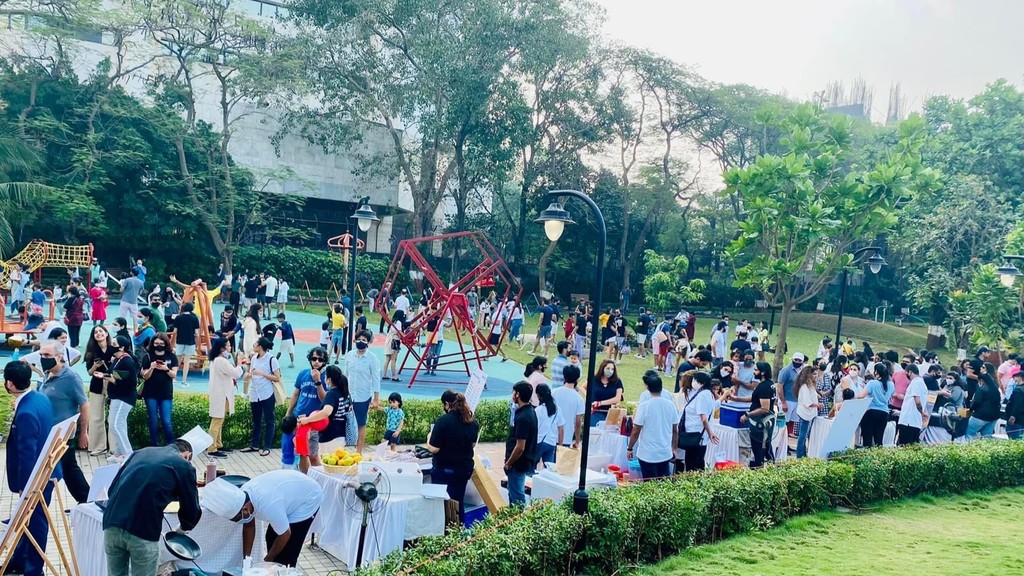
In Mumbai, land for development is at a premium, comprising flat, large, uniformly shaped parcels above sea level. This skews priorities, as open spaces with irregular boundaries or topography get neglected, despite demand. Coastal areas in particular fall prey, deemed unbuildable and left to degrade. The template of engagement (TOE) initiative flips the script – putting people before place.
According to our recent research, Mumbai’s planned open public space per capita is among the lowest globally, with only 1.24m2/person, compared to 20m2 in London or New York, and 4m2 in Hong Kong.
Along its 149km coastline, only around 10% (16km) is accessible through beaches and promenades, while the remaining 130km comprises mangroves, fishing villages, inaccessible port and defence land, neglected areas and encroachments. Barbed wire, debris and waste have created ‘no-go’ zones, severing Mumbai’s historic connection to the sea.
Collaborative efforts among stakeholders, including local communities, civil society, developers, visionaries and municipal authorities are essential to transform the entire coastline into sustainable public spaces, coupled with ecological restoration in sensitive areas. The objective is to unite these fragmented sections into a cohesive, vibrant whole.
One such collaborative revitalisation effort can be seen at S B Somani Park, a new public park carved out of a formerly derelict 6,000m2 open space in Mumbai’s upmarket Cuffe Parade neighbourhood. Despite being designated as a public recreation area in the city’s development plan for decades, the site had fallen into abject neglect and disuse.
Read the full news on IIED – International Institute for Envrionment and Development
Recommended by Luisa Bravo


More Stories
Beyond the Visible Edge: Karang Bengang as Spatial Liminality and an Ecological-Ritual Network in Balinese Customary Space
A Russian Parks Program Creates Over 350 Public Spaces and Nurtures Local Design Talent
Cairo is becoming unwalkable