



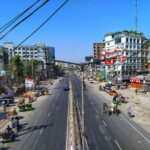


Neighbourhoods where people can pop out to a shop, cycle to their doctor or walk children to school are places that many people have enjoyed in the past. But, given planning and urban design practices since the proliferation of the car, being able to do this cannot be taken for granted today. As local authorities look to tackle climate change, air pollution and promote healthier lifestyles, they are also looking to develop places where people can live well locally.
Some towns and cities already offer their citizens this style of living. For others, there is a widespread ambition to see 20-minute neighbourhoods widely woven into existing urban, suburban and rural life, so that people there can ‘live well locally’. In Scotland, for example, the government has committed itself to implementing 20-minute neighbourhoods nation-wide alongside its actions and ambitions for net-zero greenhouse gas emissions by 2045.
A major attraction of the 20-minute neighbourhood is that it appears straightforward and easy to grasp. But this is an illusion. Behind this seemingly simply idea lies a great deal of complexity, making it difficult to achieve in practice. Many post-war neighbourhoods have been designed around the car. Creating a 20-minute neighbourhood requires bringing together many strands, not all of them in the gift of the local authority, and many beyond the control of planners and urban designers. Implementing them may require overcoming a degree of fear and scepticism from local stakeholders.
So what are the necessary ingredients to create a 20-minute neighbourhood? How do you bring them together? And how do you get the necessary buy-in from stakeholders?
Read more and download the full report here.
Recommended by Luisa Bravo

More Stories
San Francisco Shared Spaces Sustainability Strategy
Guide to Walkable Public Space from NSW Government (Australia)
The Warsaw Uprising Mound Park