


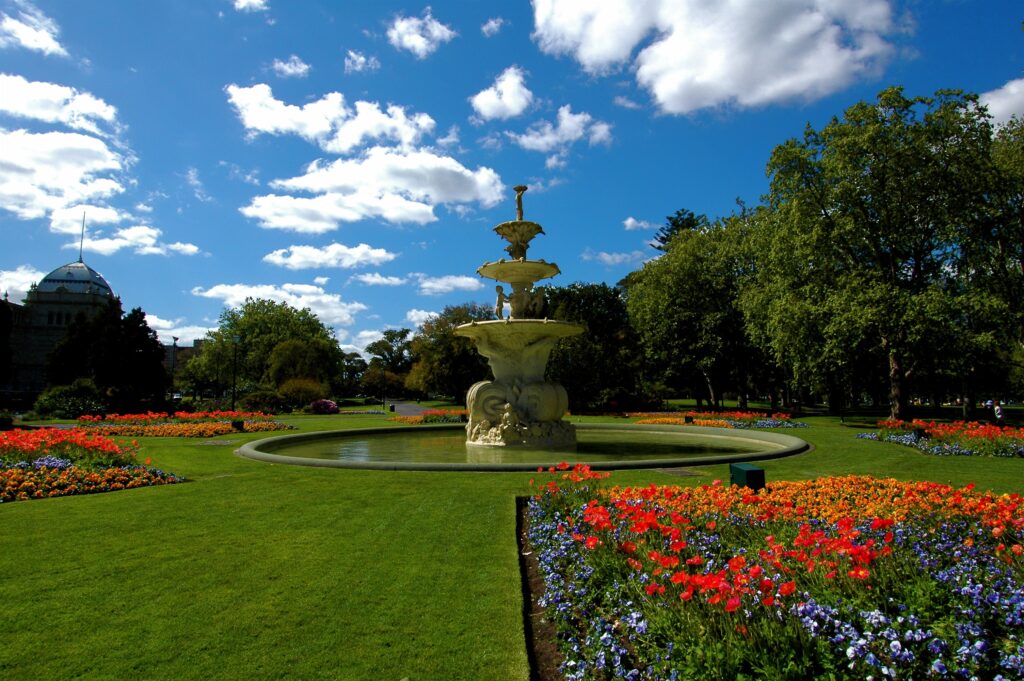
British attempts to assert dominance on a far-away colony were achieved through the execution of planning policies in the initial townships. These old imperial concepts of planning still have direct impacts on how Australians interact with public space in the inner city.
The use of public space in cities around the world is an effective way for both governments and citizens to express themselves. These uses include: exercising authority, as well as challenging it; celebrating and mourning; and casual recreational activity. These ways of engaging with public space have never quite translated into the Australian context.
This is because the architecture of public spaces provided the environment for colonial dominance to be achieved. While towns and new suburbs in the young colony were deeply influenced by European urban design, a key feature was excluded – the piazza. Governor Richard Bourke made very clear to surveyors that new towns in New South Wales (which at the time encompassed present-day Victoria) must not include public squares as these could promote rebellion.
Bourke’s deliberate exclusion of a city square may not have stopped democracy from finding its way into the eastern colonies. However, his wish to prevent mass public gatherings in the city was certainly realised.
In Melbourne’s case, this occurred long after the establishment of Victoria as a separate colony with a democratically elected parliament. Colonial controls over how people used public spaces can still be felt today as the city seeks to consolidate suburban and urban living.
Control by design
The placing of ornate, iron, wooden, or stone fences at first glance seemed to serve a purely decorative purpose.
Read the full article on The Conversation
Author:
Recommended by Luisa Bravo
Yes, I think Australians are great exponents of CPTED because of this – control, surveillance, and a reluctance to acceptance of those just ‘hanging out’ in public. ‘loitering’ (up to know good) was an offence!
Sad. Thankfully this is changing.